
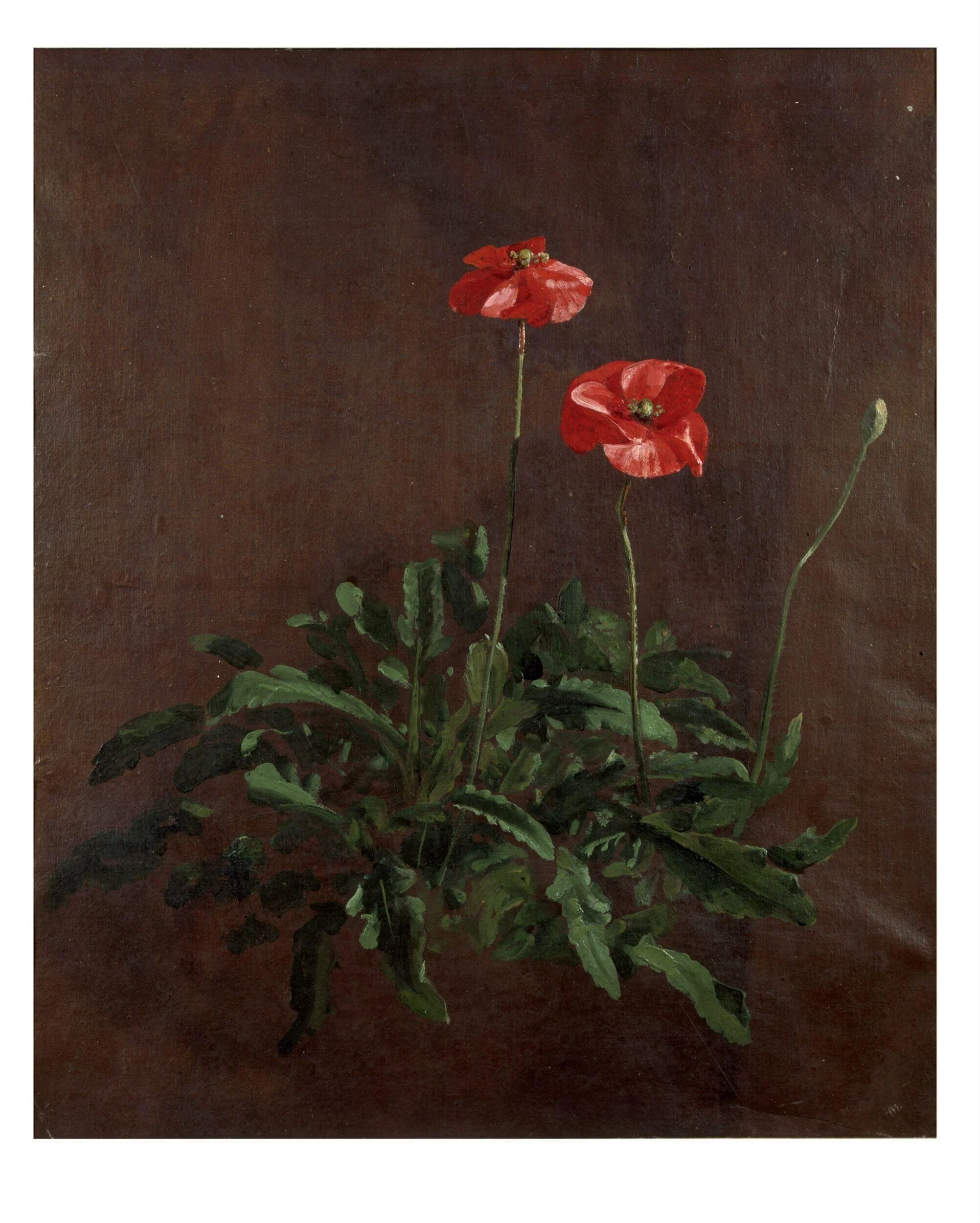
John Constable (1832). Study of poppies. [Oil on paper with a brown ground]. Victoria and Albert Museum, London.
Dear All,
Please join us for services this week, which are taking place in person or via livestream through our YouTube Channel. You can find gathering times and service sheet links below.
Friday 6 November
10:30pm — BCP Holy Communion (Revd Dr Matthias Grebe)
Sunday 8 November
11.00pm — BCP Holy Communion
Sermon: ‘Keep Awake!’ (Revd Dr Mark Scarlata)
Service Sheet: Here
Other notices:
StED Talks — 2026 Michaelmas Term Card
StED Talks are series of presentations to engage theologically with experts on topics related to the life of the church and the academy. We invite you to join us at St Edward’s for the following talks which will begin at 5pm followed by time for Q&A. Wine and nibbles will be served afterward. These are free events, but ticketed through Eventbrite (for catering purposes). Please follow us on social media to access tickets to each talk or sign up to receive email updates at : www.stedwardscambridge.co.uk
18 November, 5:00pm — Prof. Ben Quash
’Anglican Aesthetics: Do They Exist?’
University of Cambridge, Regius Professor of Divinity
Giving: We are grateful for all of your gifts! Offerings may be made via BACS (Sort: 20-17-19 / Acc. No.: 30851477 / Acc. Name: St Edwards Church), for standing orders, or the SumUp machine on the table by the door, for contactless giving. There is also a wall-mounted deposit box by the door for cash and/or cheques.
Exciting Holiness — Tuesday, 3 November
Richard Hooker - Born in Heavitree in Exeter in about 1554, Richard Hooker came under the influence of John Jewel, Bishop of Salisbury, in his formative years and through that influence went up to Corpus Christi College, Oxford, where he became a fellow. He was ordained and then married, becoming a parish priest and, in 1585, Master of the Temple in London. Richard became one of the strongest advocates of the position of the Church of England and defended its ‘middle way’ between puritanism and papalism. Perhaps his greatest work was Of the Laws of Ecclesiastical Polity which he wrote as the result of engaging in controversial debates. He showed Anglicanism as rooted firmly in Scripture as well as tradition, affirming its continuity with the pre-Reformation Ecclesia Anglicana, but now both catholic and reformed. Richard became a parish priest again near Canterbury and died there on this day in the year 1600.
And Death Shall Have No Dominion
Dylan Thomas
And death shall have no dominion.
Dead men naked they shall be one
With the man in the wind and the west moon;
When their bones are picked clean and the clean bones gone,
They shall have stars at elbow and foot;
Though they go mad they shall be sane,
Though they sink through the sea they shall rise again;
Though lovers be lost love shall not;
And death shall have no dominion.
And death shall have no dominion.
Under the windings of the sea
They lying long shall not die windily;
Twisting on racks when sinews give way,
Strapped to a wheel, yet they shall not break;
Faith in their hands shall snap in two,
And the unicorn evils run them through;
Split all ends up they shan't crack;
And death shall have no dominion.
And death shall have no dominion.
No more may gulls cry at their ears
Or waves break loud on the seashores;
Where blew a flower may a flower no more
Lift its head to the blows of the rain;
Though they be mad and dead as nails,
Heads of the characters hammer through daisies;
Break in the sun till the sun breaks down,
And death shall have no dominion.
Almighty and eternal God, you have kindled the flame of love in the hearts of the saints: grant to us the same faith and power of love, that, as we rejoice in their triumphs, we may be sustained by their example and fellowship; through Jesus Christ your Son our Lord, who is alive and reigns with you, in the unity of the Holy Spirit, one God, now and for ever.
